Dairy: What We Believe Versus Reality
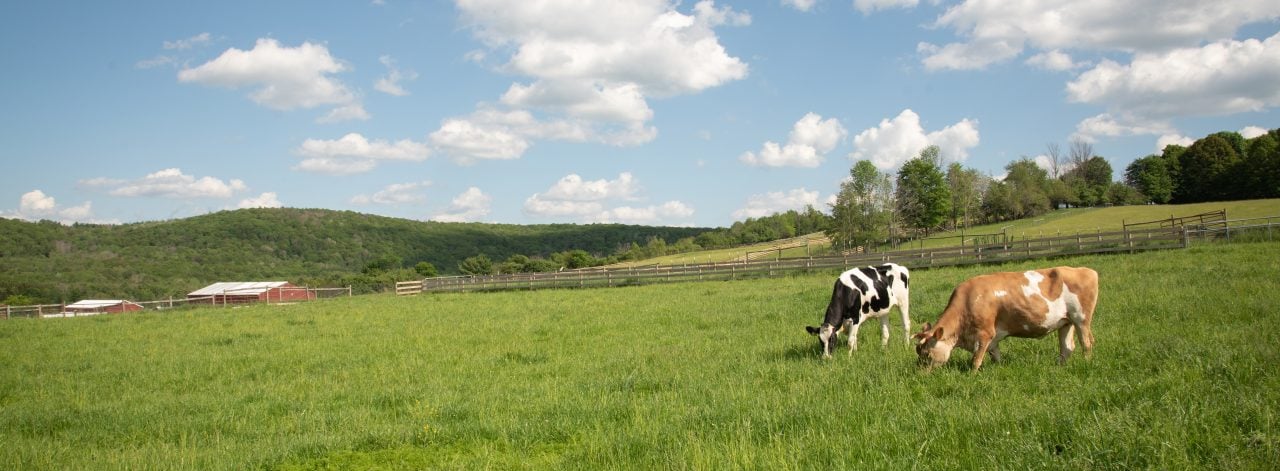
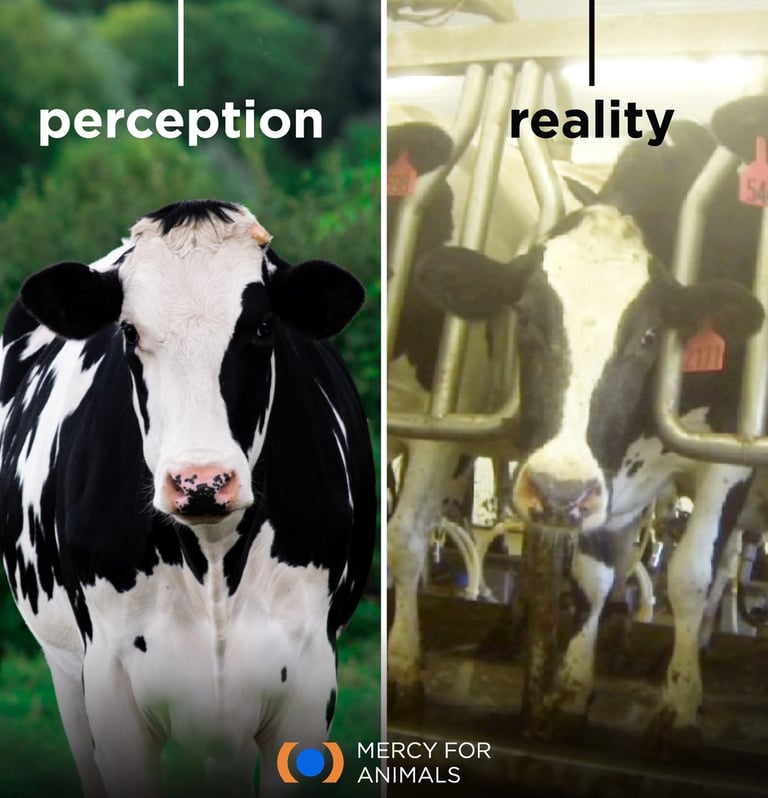
Happy cows grazing peacefuly in green-grass pastures sure sounds nice. If only it were true...
What We Believe
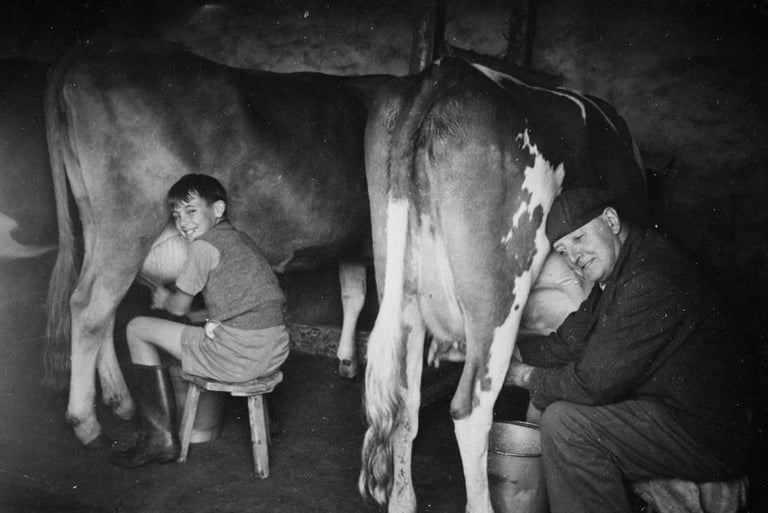
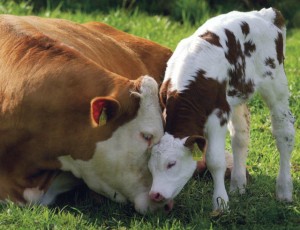
Dairy cows live outdoors on rolling green hills, pastures, and meadows, grazing peacefully all day on lush, sweet grass. Dairy cows naturally produce milk, so once a day a cow voluntarily comes down into a big red barn to be milked. Her milk is gently squeezed from her teats by either a person or by some kind of gentle machine.
During this process, she is treated very kindly and lovingly. Her udder and her teats are clean and healthy, and she receives prompt veterinary attention if she is ill or injured. She may also be given vitamin and mineral supplements to help her to be healthy and have a long happy life.
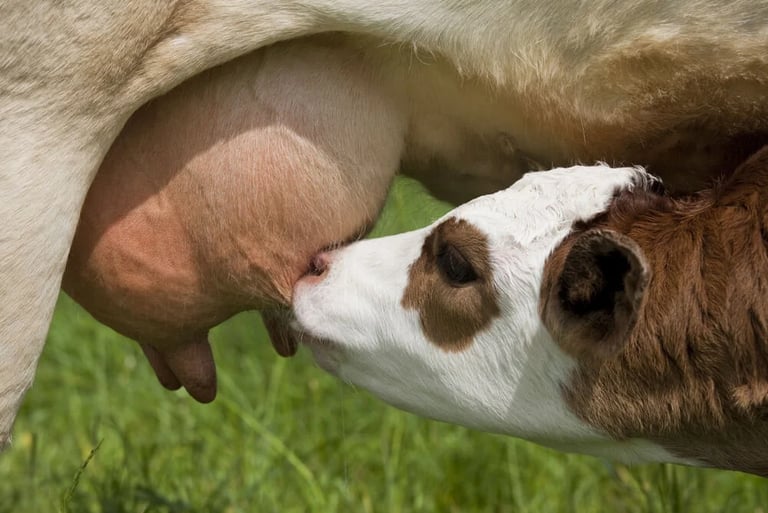
Sometimes, out in the fields, a bull and a cow will mate and the cow will get naturally impregnated. When she gives birth to her calf in the meadow, she then suckles that calf for a year or two before slowly going through a natural weaning process.
However, during those suckling years, the cow continues to voluntarily come into the barn once a day so that any excess or surplus milk can be gently collected before she returns outdoors to her calf.
While she is inside the barn being milked, her calf frolics in the fields and plays with all the other calves of the herd, being looked after by all the "aunties," i.e. the other mama cows of the herd. The female calves will grow up to be dairy cows, and the male calves will grow up to be bulls, and they all will have the same wonderful life as the rest of the herd.
Each cow has a name, such as "Blossom" or "Old Bessie," and they will live out their long lives (15 - 20 years) in the pastures and meadows, until they finally die of old age or are humanely euthanized (if suffering). They are buried in the fields as fondly-remembered friends.
Dairy farmers are kind to cows, and the Dairy industry deeply cares about the welfare of their animals, since they want them to live long, happy lives and be able to continue to share their spontaneously arising milk with us. Since dairy cows aren't slaughtered, the Dairy industry has nothing to do with the meat industry, and, thus, being "vegetarian" is a compassionate and kind choice that does not cause any harm to animals.
The Reality
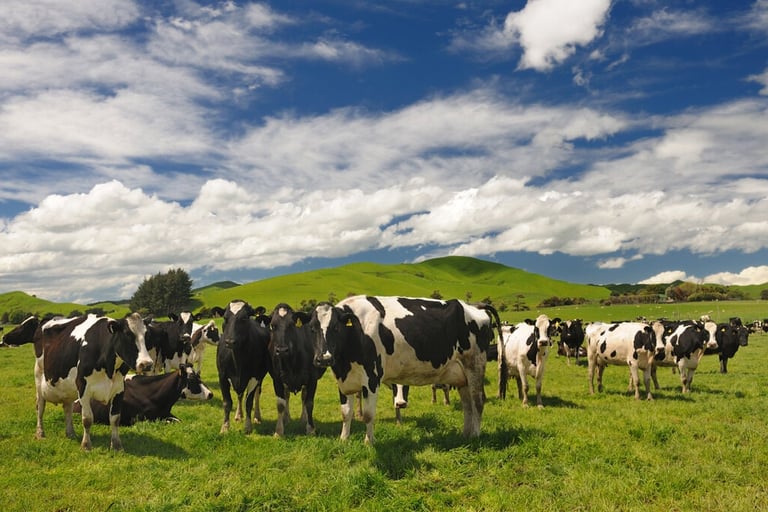
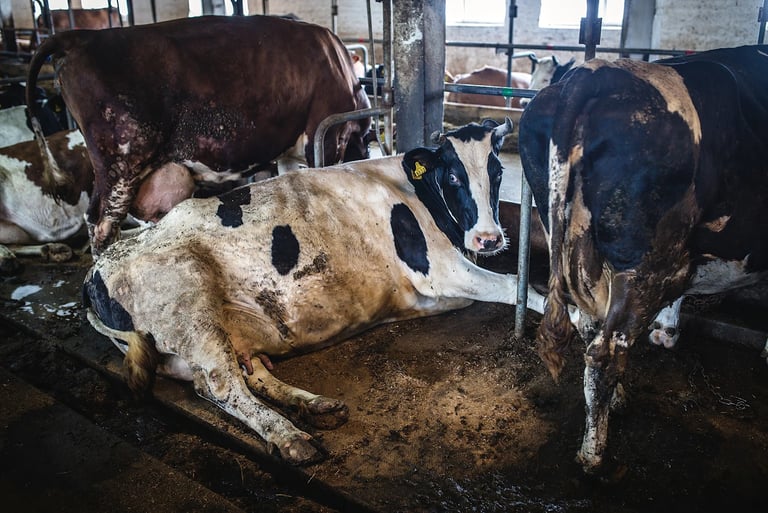
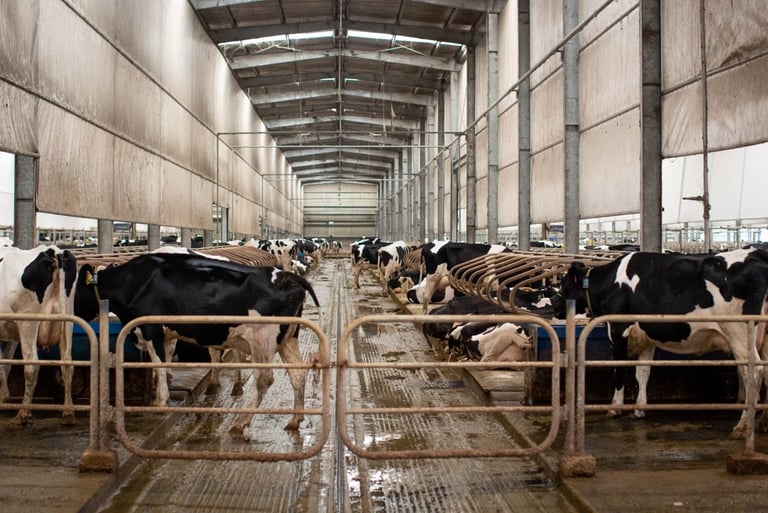
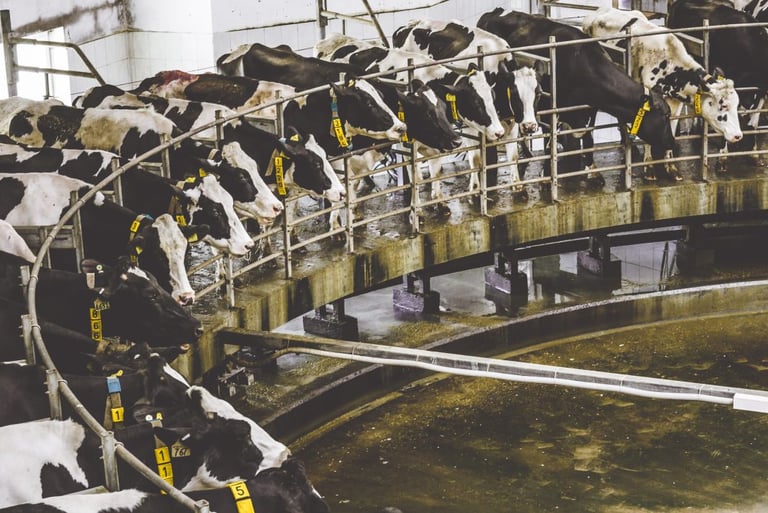
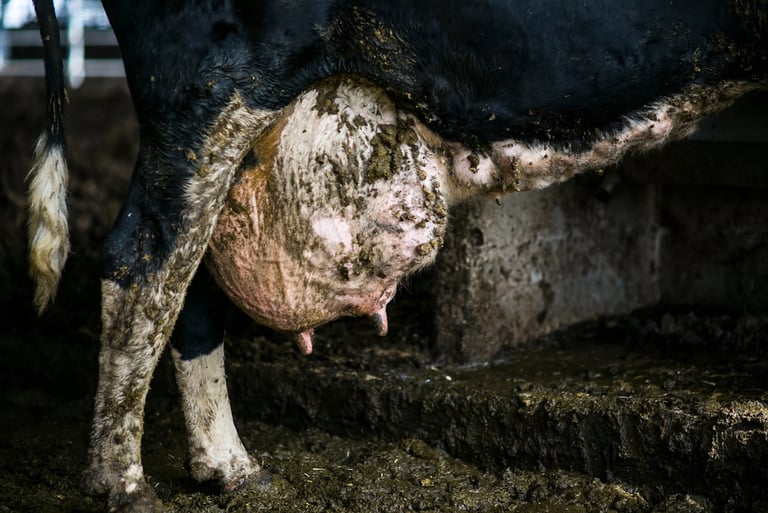
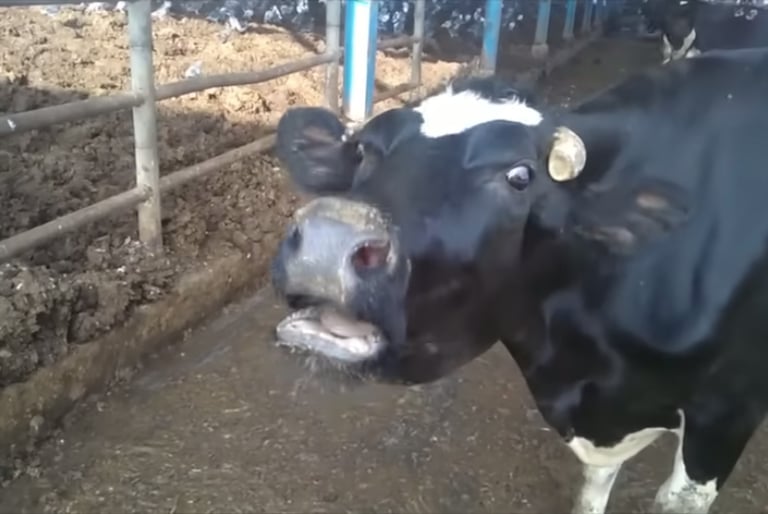
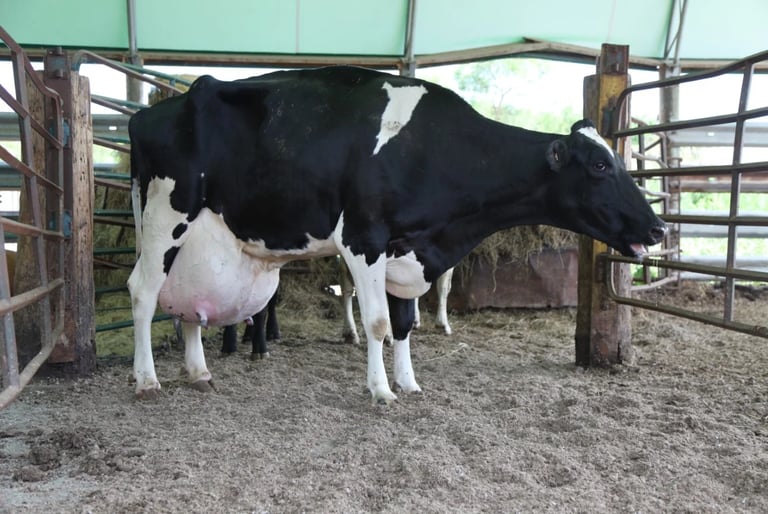
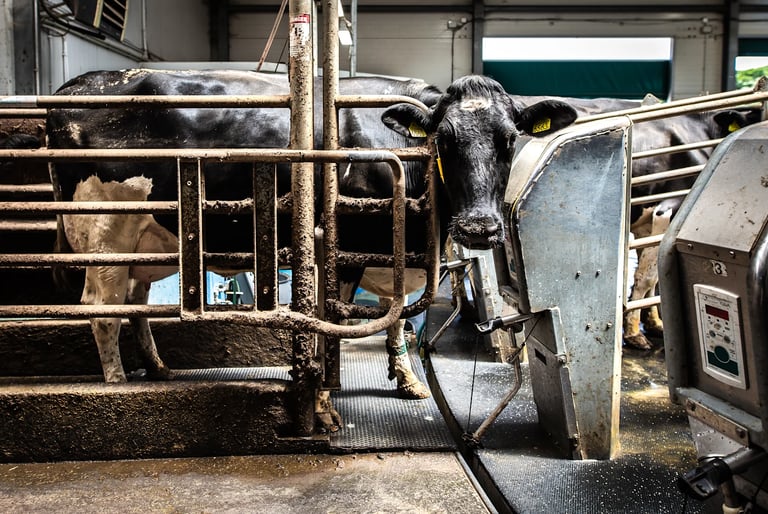
Dairy cows mostly live indoors on cement slabs or in dirt-floor pens layered with a little straw. The conditions inside these large, crowded warehouses can often be quite filthy—a mix of manure and dirt and mud. Standing and lying on cement floors or packed dirt day after day is taxing and painful for the cows.
Most of these cows have little or no access to the outdoors, let alone meadows or pastures. Most will never actually graze on grass at any point in their relatively short lives. Instead, they are usually fed a mixture of corn, soy, grains, and hay. In the U.S., farmers sometimes even feed cows ground-up waste from other animals (such as chicken manure)! Not only is it abhorrent to feed chicken poop to cows, but this practice is also suspected to be the primary cause of bird-flu outbreaks in U.S. cows.
Cows do not spontaneously make milk. Just like all mammals, including humans, cows must first give birth to a baby (a calf) in order to produce milk. Therefore, semen is collected from a bull using a painful process called "electroejaculation" and/or artificial vagina sleeves.
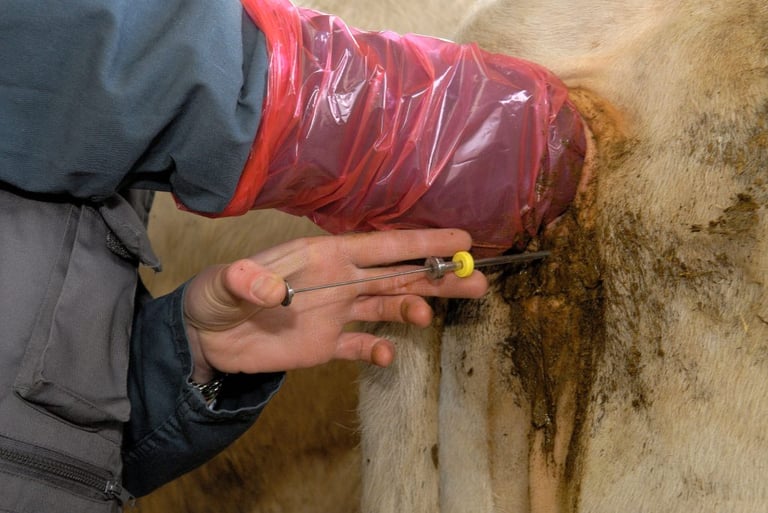
Dairy cows are then artificially inseminated after being restrained in a narrow chute known as a "rape rack." In this chute, a dairy worker inserts one of his arms into the rectum of a restrained cow and, with his other arm, inserts a rod-like device called an Al gun into her vagina and injects the semen directly into her uterus.
Cows are first inseminated at 14 - 15 months, so that they will have their first calf at about 2 years or age. After this, they are artificially inseminated every single year (usually within 3 months after giving birth), so that they continue to produce a calf each year along with a steady quantity of milk for humans to harvest (e.g. steal).
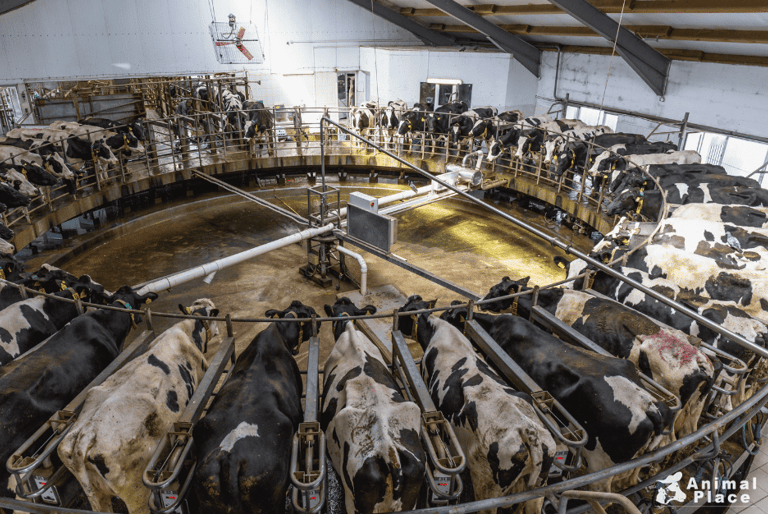
So, with their milk supply full, dairy cows are involuntarily forced into milking stalls, which are often on giant "rotary milking parlous" (where 40 -60 cows can be milked at once), and their teats are hooked up to machines that suck the milk out of their udders. This happens three times a day—morning, noon, and night. Why so often? Well back in 1950, the annual per-cow milk yield was 5,314 pounds. Today, in 2025, it is 24,200 pounds. Per cow! Per year! This increase is mostly due to selective breeding through semen collection.
This amount of milk production and milk extraction takes a heavy toll on a cow's body. One very common condition is mastitis, which is a painful swelling of the mammary glands (teats) usually due to a bacterial infection. Nearly 20% of dairy cows suffer from this painful condition, yet are usually milked anyways. Dairy Cows also suffer from: Bovine Leukemia Virus, Bovine Immunodeficiency, Johne's Disease, Milk Fever, Metabolic disorders (such as ketosis and laminitis), and Udder ligament damage, and they are often given drugs such as: Antibiotics, Prostaglandin, and Tranquilizers, mostly administered by farm workers (rather than vets).
As noted, a cow must give birth to a calf every year in order to produce milk. These newborn calves are then ripped away from their mothers, usually within 24 hours (and sometimes almost immediately after birth) so that they do not drink the milk of their mothers (which the Dairy industry wants for humans). Instead of drinking cow's milk from their mother's teats, they are fed soymilk from a bottle! This separation causes great distress for both mother and calf, and the mama cow will bellow in anguish for her calf, sometimes for a week or more!
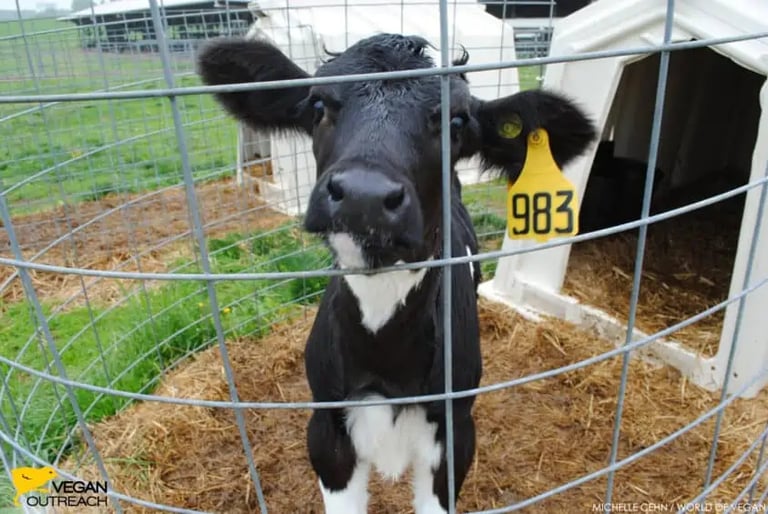
The female calves are put in individual hutches and raised to be dairy cows. The male calves and any "surplus" females are either killed immediately or raised for veal (calf meat) in tiny pens that don't allow much movement (so the meat will be soft) and then slaughtered within 3 - 6 months. (The Dairy industry IS the Veal industry!)
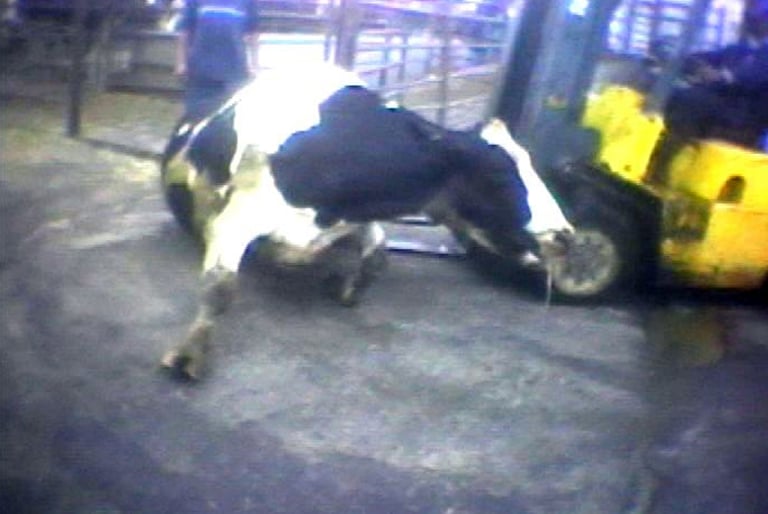
Dairy cows have numbers, not names, which are usually found on ear tags. After 3 - 5 years of intensive milk production, including the regular forced pregnancies and birthings, a cow's milk production tends to drop off and her body tends to break-down. At this point, sometimes lame and in pain, she is forced to limp into a trailer (often made to move with electric cattle prods), or, if she is too broken down to move on her own, is dragged/pushed out with forklifts into the trailer, where she is taken to a slaughterhouse and killed for beef. (A full 20% of all beef comes from dairy cows.) Nobody mourns her death.
The Dairy industry is incredibly cruel to cows in so many ways, some of which are described above. As noted, all dairy cows are slaughtered for beef after about 5 years of suffering, whereas as male calves are raised and killed for veal or cheap beef. Since the Dairy industry IS the meat industry—containing all the horrors of meat production along with its own unique set of additional horrors and prolonged suffering—being vegetarian (as I once was), while often done out an intention to be compassionate and caring toward animals, is not really a compassionate choice at all (given the realities of the Dairy industry).
When you have bulls and cows biologically abused for impregnation purposes, calves ripped away from their mothers within a day and killed within 6 months, and cows slaughtered for ground beef after being forced to make milk for humans for 3 - 5 years, how can it be compassionate? If you are a vegetarian who does not eat meat for the sake of the animals, but does eat dairy products— thinking that this is a kind choice—I urge you to take the next step and multiply your compassion a hundred fold by becoming vegan.
One More Thing
If, prior to reading this, you believed the Dairy Industry is kind to cows, don't feel bad or guilty. Why shouldn't we believe it? After all, we want to believe that cows have the wonderful lives described in the first section, and the Dairy industry spends hundreds of millions of dollars annually on ad campaigns and lobbying in order to convince us to believe it. I once believed it myself. But then I discovered the truth and, now, free from those lies, I share that same truth with you!
For more information about the Dairy Industry, you can read this article, or this one, or check out my Dairy page, which has other articles, as well as videos, such as this one and this one.
Mahalo for reading. Aloha...
Photo by: Farm Sanctuary
Historypin
Andrew Skowran
Shutterstock
Shutterstock
Shutterstock
Shutterstock
Konrad Lozinski
Louise Jorgensen

Watch:
